

Why EPC Owners Stay Stuck in Firefighting Mode
“Everything still comes back to me.”
If you run a ₹50 crore EPC business, you’ve probably said this more than once. Your site engineers are competent. Project managers know their work. Yet somehow, every client escalation, every BOQ deviation, every vendor dispute lands on your desk.
The problem isn’t that your team lacks capability. Rather, they’ve been trained to execute, not lead. They wait for approvals. Managers escalate decisions. Consequently, your business grows—but you don’t grow with it. Instead, you become the bottleneck.
This isn’t a people problem. It’s a leadership development gap. Moreover, it’s the reason most EPC companies struggle to scale beyond ₹100 crore. Because growth doesn’t come from winning more projects. It comes from building mid-level managers in EPC companies who can own outcomes, not just follow instructions.
This guide shows you how to develop that second line of leadership—without losing control or risking live projects.
Why Mid-Level Managers Matter in EPC Companies
In EPC businesses, mid-level managers occupy the most critical position in your organization. They sit between site teams and promoters. Meanwhile, they connect clients with execution. These managers translate strategy into daily decisions.
When this layer is weak, everything breaks.
Think about it: below ₹20 crore, the promoter can stay involved in every project. Above ₹50 crore? That becomes impossible. You need managers who can run projects independently—not just coordinate them.
Here’s where most EPC companies hit a wall:
The promoter’s bandwidth maxes out. Meanwhile, the second line of leadership isn’t ready to step up. Projects pile up, but the organization can’t absorb them. As a result, either growth stalls, or quality suffers.
There’s a crucial difference:
A senior engineer solves technical problems. However, a leader makes trade-offs between cost, time, and quality—then owns the outcome.
A project manager coordinates tasks. In contrast, a decision owner takes calls on vendor changes, design modifications, or client negotiations without escalating everything upward.
Leadership development in EPC companies isn’t about seniority. Rather, it’s about building people who can think like owners, even when you’re not around.
Why Most EPC Companies Struggle to Develop Leaders
The pattern is predictable across EPC businesses:
A client calls with a complaint. The site engineer escalates to the project manager. Then the project manager escalates to you. You solve it. Everyone moves on.
Next week, the same cycle repeats with a different issue.
This creates people dependency in EPC businesses—and it’s rarely intentional. Here’s why it happens:
Promoters Solve Problems Themselves
When you can fix something in 10 minutes, why wait for someone else to figure it out over two days? Because speed feels productive. However, it trains your team to wait for you.
Managers Never Learn Decision-Making
If every tough call gets escalated, your managers never develop judgment. Consequently, they become risk-averse. They escalate even routine decisions because the cost of being wrong feels too high.
Promotions Based Only on Experience
Your best site engineer becomes a project manager. Your senior project manager becomes a regional head. But promotion doesn’t automatically build leadership capability. Experience and leadership aren’t the same thing.
No Leadership Pipeline
Most EPC companies don’t have a structured path for developing leaders. There’s no clear progression from executor to owner. As a result, people grow older in the organization—but not necessarily more capable of independent leadership.
Fear of Mistakes on Live Projects
EPC projects run on tight margins. A wrong material order means cost overrun. A delayed approval means penalty clauses kick in. Therefore, the stakes feel too high to let managers experiment. Yet, without mistakes, there’s no learning.
Think about these common scenarios:
- A client requests a BOQ deviation. Your manager doesn’t know whether to approve it or how to price it. You step in.
- A vendor delivers substandard material. Your site engineer spots it but doesn’t know how to handle the commercial and relationship angle. You get involved.
- A project faces a three-day delay. Your project manager panics and calls you, even though the solution is straightforward.
Each time you solve these problems, you reinforce dependency. Leadership development in EPC companies requires you to resist that urge.
What Leadership Really Means in an EPC Business
Leadership isn’t about motivation speeches or corner cabins.
In an EPC context, leadership means something very specific: taking decisions without constant escalation. Managing trade-offs between cost, time, scope, and quality. Owning outcomes—both good and bad. Furthermore, it means leading across functions, not just within your technical domain.
Consider this comparison:
| Executor Mindset | Leader Mindset |
|---|---|
| Follows instructions | Interprets intent and decides |
| Escalates problems | Solves most, escalates few |
| Manages tasks | Manages trade-offs |
| Reports status | Takes ownership of outcomes |
| Stays in their lane | Coordinates across functions |
An executor says: “The client wants a change. What should I do?”
A leader says: “The client wants a change. Here’s the cost and time impact. I recommend we do X because Y. Do you see it differently?”
That shift—from asking for instructions to proposing solutions—is what leadership development in EPC companies aims to create.
Leadership in EPC isn’t about charisma. Rather, it’s about judgment, accountability, and the willingness to own decisions even when things go wrong.
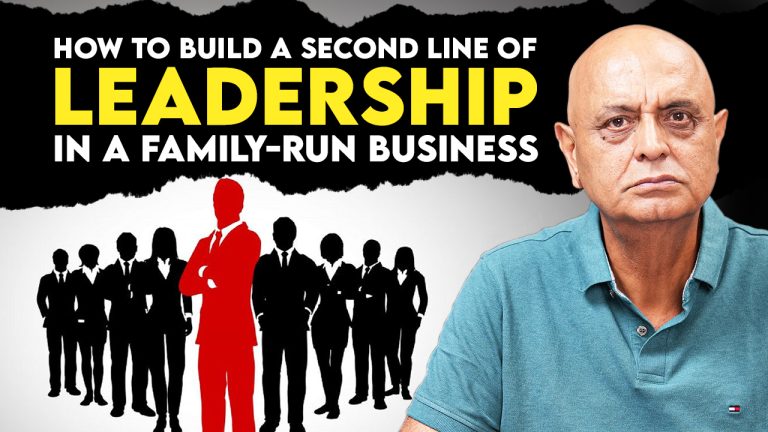
Building a Second Line of Leadership in EPC Companies
Here’s the hard truth: your business won’t scale if you’re the only person who can make decisions.
Building a strong second line of leadership starts with deliberate action. It won’t happen by accident. Instead, you need a structured approach.
Identify Leadership-Potential Managers
Not everyone is ready to lead immediately. However, some show clear signs:
- They anticipate problems before they escalate
- Team members naturally go to them for guidance
- They think about the project, not just their task
- They’ve handled pressure without falling apart
Look for these people first. Don’t assume leadership potential follows seniority.
Redefine Roles from “Doing” to “Owning”
Right now, your project managers probably “coordinate” projects. Instead, shift their role to “own” project outcomes. That means they’re accountable for delivery, client satisfaction, and profitability—not just timelines.
For example:
- Instead of “Ensure materials arrive on time,” make them own “Ensure project completes within budget and timeline.”
- Instead of “Coordinate with subcontractors,” give them authority to “Select, negotiate with, and manage subcontractors.”
Small language changes create big mindset shifts.
Shift Decision Rights Gradually
You can’t transfer all authority overnight. Instead, create clear decision zones:
Zone 1: Decide Independently Routine approvals, minor variations, standard vendor orders. Let them decide without asking you.
Zone 2: Decide with Consultation Non-standard client requests, new vendor empanelment, design changes with cost impact. They propose, you guide, they decide.
Zone 3: Joint Decision Major cost overruns, client disputes involving penalties, project timeline extensions. You decide together initially. Over time, this zone shrinks.
Be explicit about these zones. When managers know what they can decide, they stop escalating everything.
Create Exposure Beyond Their Function
EPC project leadership requires cross-functional thinking. Your project manager needs to understand:
- How procurement impacts site timelines
- How client billing affects cash flow
- How design changes ripple through execution
Rotate them through reviews for other projects. Include them in client meetings outside their scope. Let them sit in on commercial negotiations. Exposure builds perspective. Consequently, they start thinking like business owners, not just functional specialists.
Assign Mini-P&L or Project Ownership
Give one manager complete ownership of a smaller project. Let them manage the P&L. They handle client coordination, vendor management, site execution, billing, and collections.
Yes, they’ll make mistakes. However, those mistakes on a ₹2 crore project are cheaper than mistakes on a ₹20 crore one. Think of it as leadership training with controlled risk.
When mid-level managers in EPC companies run their own projects, they learn what you learned when you started: that every decision has a cost, and ownership changes how you think.
Practical Steps to Develop Leaders from Mid-Level Managers
Theory is useful. Execution is everything. Here’s how to develop leaders in EPC business systematically.
Structured Delegation
Delegation isn’t “I’m busy, you handle it.” Rather, it’s “You own this decision. Here’s the context. Here’s what success looks like. Check in if you need guidance.”
Start small:
- Week 1: Let them decide on daily site issues without calling you
- Week 4: Let them handle client queries independently
- Week 8: Let them negotiate change orders within defined limits
Track what they’re deciding. Initially, stay close. Gradually, step back. Furthermore, resist the urge to reverse their decisions unless absolutely necessary.
Weekly Decision Reviews
This isn’t a status update meeting. Instead, review the decisions your managers made that week:
- What did they decide?
- What was their reasoning?
- What would you have done differently?
- What did they learn?
The goal isn’t to criticize. Rather, it’s to build their decision-making muscle. Over time, their judgment improves. Consequently, they escalate less and own more.
Mistake Cost vs Learning Cost
Here’s a mental model that helps:
If the cost of a mistake is ₹50,000 but the learning is worth ₹5 lakh in future avoided errors, let them make the mistake.
Not every error is catastrophic. Some mistakes are just expensive lessons. When you step in to prevent every error, you also prevent all learning.
Of course, don’t let them make errors that kill client relationships or violate safety norms. However, a delayed material order or a slightly higher procurement cost? Let it happen. Then debrief it.
Leadership KPIs (Not Just Project KPIs)
Right now, you probably measure project managers on delivery timelines, cost adherence, and client satisfaction. Those matter. However, they don’t measure leadership.
Add these:
- How many decisions did they make independently this month?
- How many team members sought their guidance?
- Did they resolve escalations before they reached you?
- Did they proactively identify risks and mitigate them?
When you measure leadership development in EPC companies, you get more of it.
Mentoring Instead of Firefighting
When a manager comes to you with a problem, don’t solve it. Instead, ask:
- “What do you think we should do?”
- “What are the options you’ve considered?”
- “If this were your business, what would you decide?”
Guide them to the answer. Let them propose the solution. Over time, they stop asking, “What should I do?” and start saying, “Here’s what I think we should do.”
That’s when leadership has taken root.
Use SOPs as Support, Not Control
Standard operating procedures help. However, they shouldn’t replace judgment. Use SOPs for routine processes—material approval workflows, safety protocols, billing cycles.
But don’t create SOPs for everything. Leave room for managers to think, adapt, and decide. Leadership in EPC requires judgment, not just compliance.
Make Reviews Learning Forums
Your project reviews shouldn’t just track progress. Instead, make them forums where managers learn from each other:
- What worked well on Project A that Project B can use?
- What mistake did we make, and how do we avoid it next time?
- What trade-off did someone make, and was it the right call?
When reviews become learning spaces, your entire team’s capability rises. Moreover, people see that mistakes are learning opportunities, not career threats.
Common Mistakes EPC Owners Make While Developing Leaders
Even with the best intentions, promoters stumble. Here’s what to watch for:
Expecting Instant Maturity
You’ve been running projects for 20 years. Your manager has been leading for six months. They won’t have your judgment yet. Allow time for growth.
Taking Back Control Under Pressure
A client threatens to pull out. A project faces penalties. Suddenly, you step back in and take over. Your manager learns: “When it matters, the boss doesn’t trust me.”
Instead, stay involved, but let them lead. Guide without taking over.
Promoting Without Capability Building
Your senior engineer deserves a promotion. However, if you promote them without first building leadership capability, you set them up to fail. Promotion should follow readiness, not tenure.
No Clarity on Authority vs Responsibility
You make them “responsible” for project delivery but don’t give them authority to make key decisions. That’s not leadership development—that’s setup for frustration.
Be clear: if they own the outcome, they must have the power to make decisions.
Punishing Mistakes Publicly
When a manager makes a poor decision, don’t humiliate them in front of the team. Course-correct privately. Public criticism destroys confidence. Consequently, they’ll never take another risk.
These mistakes happen under stress—client pressure, cash flow issues, project delays. However, leadership development in EPC companies requires consistency, especially when things get tough.
Business Benefits of Strong Mid-Level Leadership in EPC
When you successfully build EPC project leadership within your team, the business transforms.
Reduced Owner Dependency
You can take a week off without the business grinding to a halt. Projects continue. Decisions get made. Consequently, you’re no longer the single point of failure.
Faster Execution
When managers don’t wait for your approval on every decision, projects move faster. Vendors get responses quickly. Clients get updates promptly. As a result, execution improves.
Better Client Confidence
Clients notice when they’re dealing with empowered managers instead of coordinators. When your project manager can commit to decisions on the spot, client trust increases. Therefore, repeat business and referrals follow.
Scalable Growth Beyond ₹100 Crore
With a strong second line of leadership, you can handle more projects simultaneously. Your business isn’t limited by your personal bandwidth anymore. Growth becomes sustainable.
Lower Burnout for Promoter
When you’re not firefighting daily, you have mental space for strategy—new markets, new service lines, better systems. Furthermore, you enjoy running the business again instead of feeling trapped by it.
Strong mid-level managers in EPC companies don’t just help the business. They also give you your life back.
Leadership Is Built, Not Found
Here’s the reality: you won’t hire your way out of weak leadership. The market doesn’t have ready-made leaders waiting for EPC companies. Instead, you build them from within.
EPC businesses don’t scale with more projects. They scale with better leaders who can run those projects without constant supervision.
This isn’t quick. Leadership development takes time, patience, and deliberate effort. However, the alternative—staying stuck as the bottleneck while your business can’t grow—is worse.
Start small. Pick one manager. Give them one project. Shift one decision from your desk to theirs. Then watch what happens.
The strongest EPC companies aren’t built on the promoter’s capability alone. Rather, they’re built on a second line of leadership that thinks, decides, and owns outcomes independently.
Your business will only grow as far as your people can lead.
One question to reflect on:
If you were unavailable for two weeks, which projects would stall—and why?
The answer shows you exactly where to begin building leaders.